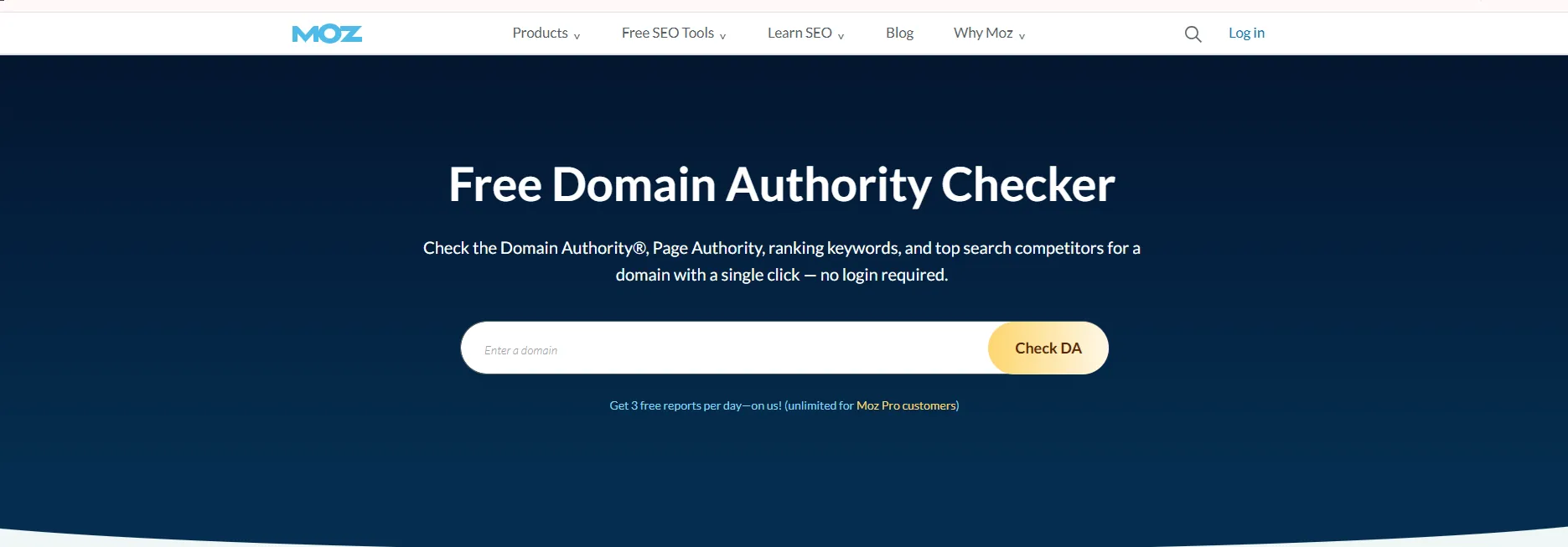
In the ever-evolving world of search engine optimization, data is everything. The ability to quickly evaluate the strength of a website, assess the quality of a potential backlink source, or benchmark your own domain against the competition can mean the difference between a thriving online presence and one that is perpetually buried on page five of Google. One of the most powerful and widely used tools for doing exactly that is a Moz DA PA Checker.
Whether you are an experienced SEO consultant managing dozens of client campaigns or a small business owner trying to understand why your website is not ranking, this guide will give you a thorough understanding of what a DA PA checker does, what each metric means, and how to use this free tool to its full potential.
The Foundation: What Are DA and PA?
Before diving into the tool itself, it is worth understanding the two metrics at its core — Domain Authority and Page Authority — both of which were pioneered by Moz, the Seattle-based SEO software company that has been shaping the industry for over two decades.
Domain Authority (DA): Measuring the Power of an Entire Website
Domain Authority, commonly abbreviated as DA, is a numerical score on a scale of 1 to 100 that estimates the overall ranking strength of an entire domain or subdomain. The score is logarithmic, meaning it is significantly easier to grow from DA 10 to DA 30 than it is to grow from DA 60 to DA 80.
The algorithm behind DA evaluates hundreds of factors, but the most influential is the quality and quantity of external websites linking to the domain. A domain with thousands of backlinks from highly authoritative sources will naturally earn a higher DA than one with only a handful of links from obscure websites.
It is crucial to understand that DA is not a metric used directly by Google. It is Moz’s proprietary prediction model. That said, it correlates strongly with real-world search performance, making it one of the most trusted third-party SEO benchmarks in the industry.
Page Authority (PA): Measuring the Strength of a Single URL
Page Authority, or PA, applies the same 1–100 scoring methodology but narrows the focus down to a single web page rather than an entire domain. PA helps you understand how likely any specific URL is to rank in search engine results.
A page can punch above or below its domain’s DA score depending on how many quality inbound links point directly to that URL. For instance, a well-linked blog post on a moderately authoritative domain might have a PA of 55 even if the domain’s overall DA is only 40. This makes PA invaluable for page-level SEO analysis and content strategy planning.
Beyond DA and PA: The Full Metric Suite
A powerful free bulk DA PA checker does not stop at just two numbers. The best tools surface a complete set of metrics that paint a holistic picture of any domain’s health and authority.
Spam Score: Protecting Your Link Profile
Spam Score is one of the most overlooked yet critically important metrics in SEO. Expressed as a percentage from 0 to 100, it reflects how closely a site resembles websites that have been penalized or banned by Google. A Spam Score below 30% is generally considered acceptable, while anything above 60% should raise serious red flags.
Before building any link or accepting a backlink from another site, running it through a DA PA checker to verify its Spam Score is an absolute must. A single high-spam link from a penalized domain can drag down your own site’s credibility and rankings.
Backlinks: The Currency of SEO
Backlinks remain the single most powerful off-page ranking signal. When a reputable website links to yours, it is essentially casting a vote of confidence in your content. The DA PA checker displays the total backlink count for any domain or page, giving you an immediate sense of how robust its link profile is.
Monitoring your backlink count over time is one of the clearest indicators of whether your link-building efforts are working. A steady upward trend in backlinks generally correlates with improvements in rankings and organic traffic.
Referring Domains: Quality Over Quantity
While a high backlink count is desirable, referring domains — the number of unique websites linking to a domain — is arguably the more meaningful metric. Search engines place a premium on link diversity. One thousand backlinks from a single domain carry far less weight than one thousand backlinks from one thousand different domains.
When evaluating a website’s authority, always look at both backlinks and referring domains together. A large gap between the two (e.g., 50,000 backlinks but only 20 referring domains) can indicate an unnatural or manipulative link profile.
IP Address Information
Some DA PA checker tools also reveal the IP address associated with a domain. This is particularly useful for technical SEO audits, identifying shared hosting environments, and detecting private blog networks (PBNs) — groups of sites set up specifically to manipulate link metrics. If several domains you are evaluating share the same IP, that is a strong signal they may be part of a link scheme.
The Power of Bulk Checking
One of the most valuable features of a modern DA PA checker is the ability to analyze multiple URLs simultaneously. Instead of manually checking websites one at a time — a painfully slow process when you have a list of 50 link prospects to evaluate — a bulk checker lets you paste in dozens or even hundreds of URLs and receive all their metrics in a single report.
This bulk functionality transforms tasks that would otherwise take hours into a matter of seconds. It is especially useful for:
Link Prospecting: Before sending guest post pitches or collaboration requests, check every target website at once to filter out low-authority or high-spam domains immediately.
Competitor Research: Analyze the DA and PA scores of your top competitors in bulk to understand the authority gap you need to bridge to outrank them.
Client Reporting: SEO agencies can use bulk DA PA data to generate quick, professional snapshots of a client’s domain health or to compare a client’s authority against their industry peers.
Backlink Audits: Paste your full backlink list into the checker to identify and flag toxic or spammy links that could be hurting your rankings.
How to Get the Most Out of a Free DA PA Checker
Simply running URLs through a checker is not enough. Here is how to turn the data into actionable SEO strategy:
Set a Baseline and Track Progress Monthly
Your DA and PA scores on day one are your baseline. Check them again every month. If your scores are rising, your SEO efforts — content creation, link building, technical optimization — are working. If they are stagnant or declining, something needs to change.
Use DA as a Minimum Threshold for Link Targets
Set a minimum DA requirement for any site you pursue for backlinks. Many SEO professionals use DA 30 as the floor for guest posting opportunities and DA 50+ for priority outreach targets. This ensures that every link you earn actually contributes meaningful authority to your domain.
Cross-Reference PA When Targeting Specific Pages
If you are trying to rank a specific piece of content, look at the PA scores of the pages currently occupying the top positions for your target keyword. If the top-ranking pages have PA scores of 45–55, you know what benchmark you need to reach or exceed with your own page.
Clean Up Your Link Profile Regularly
Use your DA PA checker to periodically review the backlink sources pointing to your site. Any domains with very high Spam Scores should be investigated and, if necessary, disavowed through Google Search Console to prevent them from dragging down your authority.
Evaluate Partnership Opportunities
Before agreeing to co-marketing campaigns, content partnerships, or sponsored content arrangements, check the DA, PA, and Spam Score of any partnering website. Associating your brand with a low-quality or spammy domain can have unintended negative consequences for your SEO.
Who Benefits Most from a DA PA Checker?
The beauty of this tool is its versatility. It serves a remarkably broad range of users:
- SEO Specialists who need rapid, reliable domain intelligence during audits and campaigns
- Content Marketers identifying high-authority platforms for content distribution and guest publishing
- Bloggers tracking their domain growth and scouting collaboration partners
- E-commerce Store Owners researching competitor authority before launching link-building campaigns
- PR Professionals evaluating the authority of media publications for digital PR pitches
- Freelance Writers demonstrating the credibility of their portfolio sites to potential clients
- Startup Founders benchmarking their new domain against established competitors
Common Mistakes to Avoid
Obsessing over DA alone: DA is one metric among many. A site with DA 60 and a Spam Score of 75% is a far worse link source than a DA 35 site with a Spam Score of 5%.
Ignoring PA on your own pages: Many site owners check their overall DA but never look at PA for individual pages. Your highest-PA pages are your most powerful assets — use them strategically.
Chasing DA at the expense of relevance: A backlink from a DA 80 website in a completely unrelated niche may be less valuable than one from a DA 40 website that is directly relevant to your industry.
Treating DA as permanent: DA fluctuates as Moz updates its index and as your link profile changes. A competitor’s DA can drop significantly if they lose backlinks or receive a manual penalty.
Final Thoughts
A free bulk Moz DA PA Checker is not just a convenience — it is a cornerstone of modern SEO practice. By delivering instant access to Domain Authority, Page Authority, Spam Score, backlinks, referring domains, and IP address data for any website on the internet, it equips you with the intelligence you need to make smarter decisions at every stage of your SEO journey.
The most successful SEO professionals are not those who work the hardest — they are those who work with the best data. Make a DA PA checker a permanent part of your SEO workflow, and you will always have the clarity and confidence to outmaneuver your competition, build a stronger link profile, and climb the rankings with precision and purpose.
Knowledge is power in SEO. Start with the numbers, and let the strategy follow.

