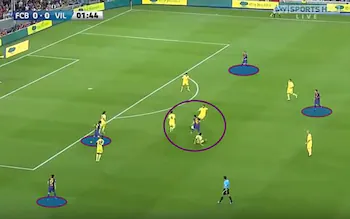
High pressing in La Liga 2016/17 was more than a stylistic fashion; it was a structural choice that reshaped how often certain teams’ matches turned into high‑event, goal‑rich contests. Sides that pressed aggressively and coherently compressed space, forced turnovers near the opponent’s box and raised total shot volumes, making their games attractive candidates for over‑goals bettors when the tactical matchup supported open football.
Why High Pressing Tends to Support Over Bets
When a team commits to a high press, they push defensive lines upfield, attack passing lanes and try to win the ball back quickly in advanced zones, which inevitably increases the number of possessions in dangerous areas. That approach creates more immediate shooting opportunities on turnovers and accelerates transitions in both directions, raising expected goals even if overall ball progression remains modest. The outcome is a higher baseline of chance creation, which typically favours over‑goals outcomes as long as finishing is not abnormally poor.
At the same time, high pressing exposes space behind the defensive line if the press is broken, allowing opponents to generate high‑quality chances through direct balls and secondary runs. For bettors, the key is that both the pressing side and their opponents gain pathways to good chances; this mutual uplift in offensive potential is what ties structurally successful high pressers to matches that often support over 2.5 or even higher totals when prices are fair.
How La Liga’s 2016/17 Environment Favoured Aggressive Systems
Across the period from 2008 to 2021, La Liga saw a steady evolution in offensive sequences, with more teams adopting coordinated pressing and possession‑based play to control territory and generate chances. As analysts have noted, ball progression in La Liga is relatively low compared with some other leagues, a factor that encourages clubs to employ pressing as a way to regain control high up the pitch rather than retreating into passive blocks.
By 2016/17, this evolution was visible in several top and upper‑mid‑table sides. Barcelona continued to blend positional play with aggressive counter‑pressing, looking to recover the ball immediately after loss, while Sevilla under Jorge Sampaoli added a more overtly intense pressing game to the upper tier. Real Madrid and Atlético Madrid, though tactically distinct, also used situational pressing to disrupt build‑up, meaning many matches between stronger clubs involved periods of high defensive engagement near the opponent’s half.
Which 2016/17 Teams Best Fit the “Successful High Presser” Profile?
Public pressing metrics from the exact 2016/17 season are not centrally summarised, but contemporary and later tactical analyses point to characteristic profiles among La Liga clubs that align with high‑pressing success. These profiles can be mapped onto teams whose attacking output and points returns reflected effective use of pressure high up the pitch.
Mechanisms Behind Their Press‑Driven Success
High‑pressing success in 2016/17 hinged on three main mechanisms. First, synchronisation: effective pressers moved as a unit, with forwards, midfielders and back lines stepping in coordinated fashion to close passing options, preventing opponents from simply bypassing the first wave. Second, recovery structure: when the press failed, successful teams had covering defenders and defensive midfielders positioned to delay counters, converting potential one‑on‑ones into more manageable situations. Third, fitness and depth: the ability to sustain intensity across 90 minutes and multiple competitions, often via rotation, prevented pressing from degenerating into chaotic lunges late in matches.
Stylised Table: High-Pressing Types and Over‑Goals Impact in 2016/17
Because precise PPDA tables for 2016/17 are not widely published, it is useful to think in terms of stylised high‑pressing team types, grounded in tactical reports and performance statistics from that era.
| High‑pressing type (2016/17) | Representative clubs / traits | Offensive impact | Over‑goals implications |
| Elite positional pressers | Barcelona‑type: possession, counter‑press, high line | Sustained attacks, high shot and goal totals | Strong lean to overs, especially vs teams willing to play from the back |
| Dynamic pressing contenders | Sevilla‑style under Sampaoli: intense, vertical transitions | Many turnovers in midfield, fast attacks both ways | High variance; overs attractive when opponent does not bunker |
| Situational high pressers | Real Madrid and Atlético in specific phases | Targeted pressure, especially when chasing or protecting leads | Overs depend more on game state and opponent; less automatic than pure pressers |
This table underscores that not every high press translated into the same betting profile; some supported consistently high totals, while others produced more context‑dependent scoring.
A Practical Checklist: Spotting High‑Press Fixtures Worth an Over Bet
For bettors in 2016/17, the challenge was to move beyond “this team presses” and toward a structured view of when that pressing would likely produce goal‑rich games rather than merely suffocating opponents. A checklist helps filter fixtures into those where overs are logically supported and those where caution is warranted.
- Pressing style vs opponent build‑up
- Look for matchups where a known high‑press side faces a team that insists on building from the back rather than going long; pressed possession tends to generate dangerous turnovers and shots.
- Defensive line height and space behind
- Check whether the pressing team uses a high defensive line; when combined with opponents capable of direct passing, this opens space for counters and increases total xG at both ends.
- Recent shot and goal trends
- Examine recent matches: do games involving this side regularly feature high shot counts and above‑average goals scored and conceded? Aggregate stats from the 2016/17 table and performance pages offer guidance here.
- Stamina and rotation
- If the team is deep into European competition, fatigue and rotation can turn a once‑coherent press into a more open, error‑prone approach that further raises goal risk.
- Opponent’s tactical response
- Consider whether the other coach historically prefers to bunker and go long—reducing turnovers near goal—or to play through pressure, which tends to keep the match high‑event.
- Market line and price
- Compare the posted total line (2.5, 3.0, 3.25) to your expectation; a game can be “good for goals” in style terms but still be priced so aggressively that overs hold little value.
Applying this checklist keeps the focus on cause–effect relationships—pressing structure, opponent behaviour, and price—rather than reputation alone.
Using UFABET to Translate Pressing Insights Into Markets
Once a bettor concludes that a 2016/17‑style high‑press fixture is likely to produce a high number of chances, the question becomes how to deploy that view in practical terms. In a multi‑market sports betting service such as ยูฟ่าเบท, over‑goals positions do not have to be limited to the standard over 2.5 line. A bettor might, for instance, combine over 2.5 with first‑half overs if both teams are known for intense early pressing, or use team‑specific goal lines where a pressing favourite is expected to generate far more shots than its opponent. In matches where pressing intensity often leads to late chaos, live markets—over 1.0 goals from 60 minutes onwards—can complement pre‑match positions, tying both to the same underlying expectation of sustained, high‑energy disruption.
How casino online Contexts Influence Press‑Based Over Strategies
Because high‑press teams often play in entertaining, end‑to‑end matches, their fixtures are natural centrepieces in a broader casino online context that promotes spectacle and quick‑fire betting. That environment can both help and hinder disciplined over‑goals strategies: on one hand, it ensures deep live coverage and multiple lines; on the other, it encourages impulsive doubling‑down when a high‑press game starts slowly or when early goals tempt bettors to chase higher totals without recalculating probabilities.
To keep pressing logic from turning into emotional over‑exposure, bettors can pre‑define their stake sizes and conditions for additional bets—such as only adding live overs when xG or shot counts significantly exceed expectations, not merely when the match “feels lively”. By separating structurally grounded reads on high pressing from the casino‑style excitement surrounding these games, they preserve the analytical edge that made this style attractive in the first place.
Where High‑Press–Linked Over Bets Fail
Even the best‑organised high press does not guarantee overs in every match. Opponents may adapt by playing long from the start, bypassing central zones and turning the game into a series of aerial duels with fewer controlled attacks. Refereeing style can also dampen intensity if early yellow cards force pressers to reduce physical engagement, lowering the number of high‑risk regains.
Additionally, weather, pitch quality and mid‑season fatigue can blunt pressing efficiency, turning what should be an up‑tempo contest into a slower, more broken game that produces fewer quality chances than models suggest. Markets themselves adapt: as analysts highlight the link between high pressing and high event counts, bookmakers raise goal lines in relevant fixtures, reducing the long‑term profitability of naïvely backing overs whenever a well‑known pressing side is involved.
Summary
Looking back at La Liga 2016/17, it is reasonable to focus on teams that succeeded through high pressing when searching for matches that naturally supported over‑goals bets, because coordinated pressure high up the pitch increased both chance creation and vulnerability to counters. Elite positional pressers and dynamic, vertical systems pushed games toward higher shot volumes and elevated xG, but their impact on totals depended on opponent behaviour, fitness, rotation and how aggressively markets priced those tendencies. For bettors, the most robust approach was to treat pressing style as one structural input in a wider checklist, then use flexible markets to express that view selectively, accepting that even the most aggressive 2016/17 pressers produced underwhelming scorelines often enough that only well‑priced overs, not every overs opportunity, held genuine long‑term value.

